
To enable engineering of bespoke crystals, combining the bets of molecular and assembled properties, powered by data science.
With cocrystallization a chemical engineer can decouple the molecular properties of their target molecule from the emergent properties of the solid form. So far, the technology has primarily been used to improve the aqueous solubility of pharmaceutical compounds, but there are many other properties that derive from crystal structure that one can imagine engineering. Creating crystals of a desired shape to facilitate manufacturing, decreasing hygroscopicity to prolong shelf life, sequestering soluble compounds from solutions, and tuning the electronic properties of thin film assemblies are all possible with control over cocrystallization.
What is a cocrystal?
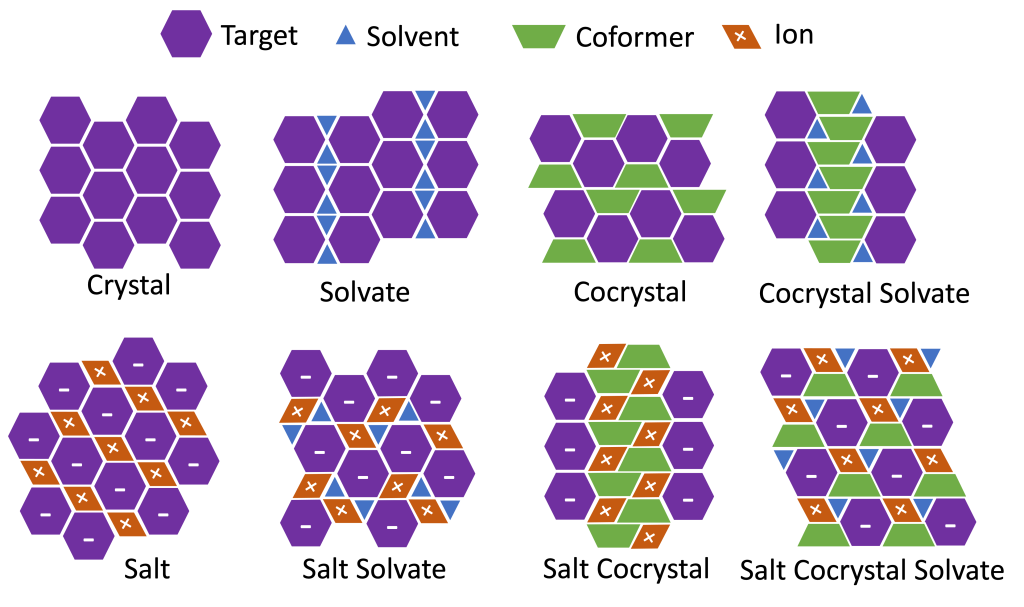
Types of multicomponent molecular crystals
Machine learning and other data science techniques could revolutionize cocrystal discovery. The Cambridge Structural Database (CSD) is full of manually annotated and uniform data. A significant challenge is the imbalance in number of coformers represented in the CSD; fewer than 25 coformers account for more than 50% of the 10,000 deposited cocrystal structures. My group will use clever sampling techniques, supplemented with additional experimental data, to overcome this challenge.
Cocrystals in the news
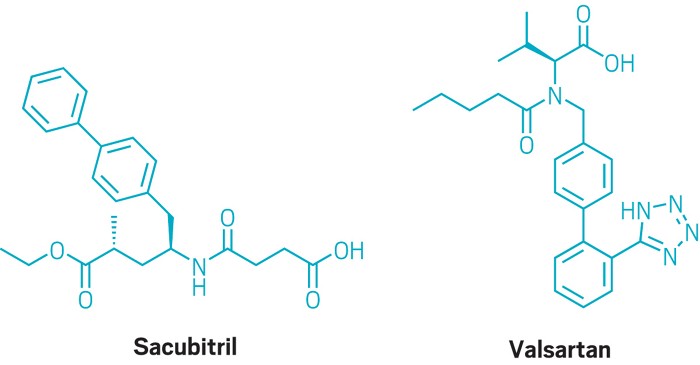
Novartis slapped with patent suit for blockbuster drug. Universities claim that Entresto infringes on cocrystal technologies their researchers discovered
Pharmaceutical cocrystals: from serendipity to design to application. The field of pharmaceutical cocrystals has reached a tipping point, particularly because cocrystals can improve the physicochemical properties of drugs without compromising their therapeutic benefit.