

Solar powered autonomous vehicle for eduction in sustainable Design:
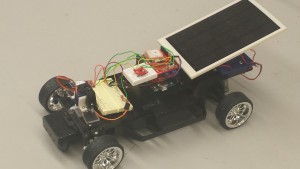
This is a multidisciplinary project that integrates advanced technologies through the use of stackable Arduino ‘shields’ and can be used to teach students about emerging and sustainable practices. This project aims to design, build, and test an autonomous solar powered ground vehicle. The vehicle will be based on a customized remote control car whose steering and acceleration will be controlled autonomously using an Arduino microcontroller. The vehicle will drive to preset destinations using a GPS receiver module and a compass to navigate to waypoints until the destination is reached. The vehicle will be powered using a lithium polymer (LiPo) battery that will be recharged using solar panels. A maximum power point tracking (MPPT) solar charger will be used in between the panels and battery in order to provide the maximum charging current to the battery. A bluetooth module will be used to allow for wireless communication between the vehicle and an Android smartphone.
Hybrid Solar Panel:
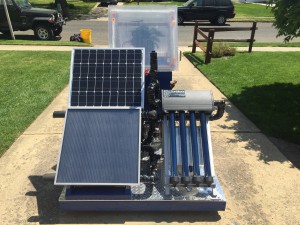
This is a multidisciplinary project that integrates advanced technologies through the use of stackable Arduino ‘shields’ and can be used to teach students about emerging and sustainable practices. This project aims to design, build, and test an autonomous solar powered ground vehicle. The vehicle will be based on a customized remote control car whose steering and acceleration will be controlled autonomously using an Arduino microcontroller. The vehicle will drive to preset destinations using a GPS receiver module and a compass to navigate to waypoints until the destination is reached. The vehicle will be powered using a lithium polymer (LiPo) battery that will be recharged using solar panels. A maximum power point tracking (MPPT) solar charger will be used in between the panels and battery in order to provide the maximum charging current to the battery. A bluetooth module will be used to allow for wireless communication between the vehicle and an Android smartphone.
Arduino-based Internet of things for Green monitoring of industrial Environment
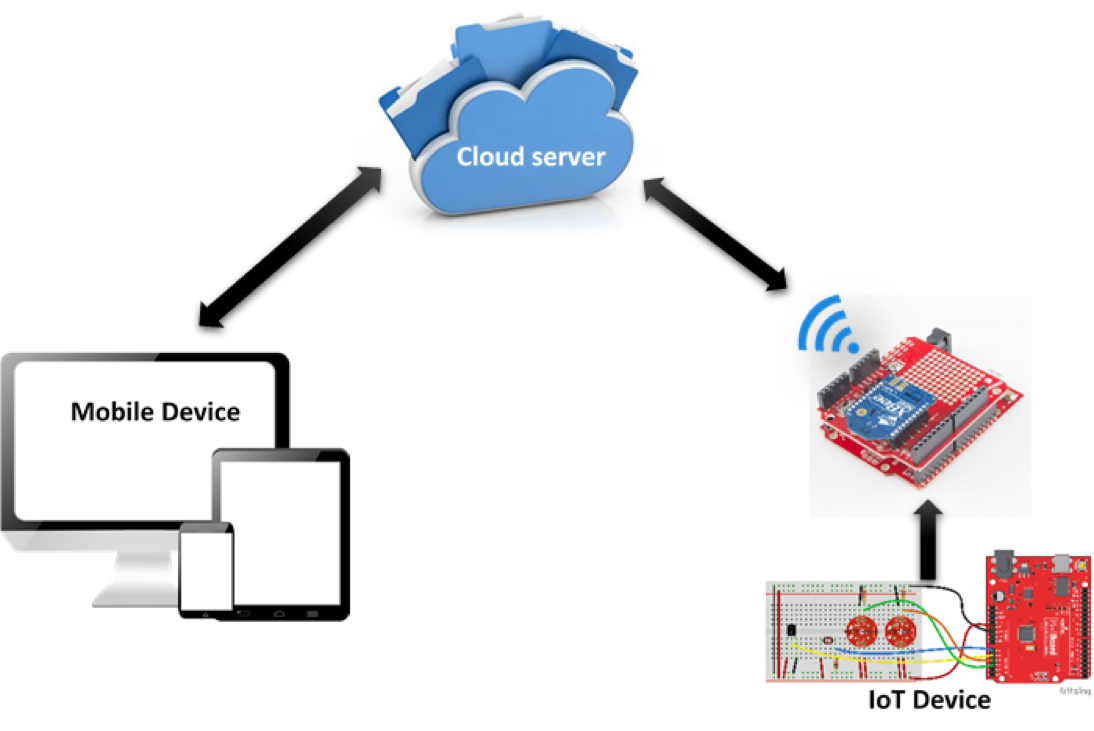
Here is how the Internet of things technology can drive the next revolution in the global renewable energy industry:
- Managing distribution of energy based on real-time data, instead of historical data.
- Predictive analytics for alert beforehand if a components need repair, or is due inspection.
- Forecast related to the output of the system will allow providers to offer data to resellers in real time.
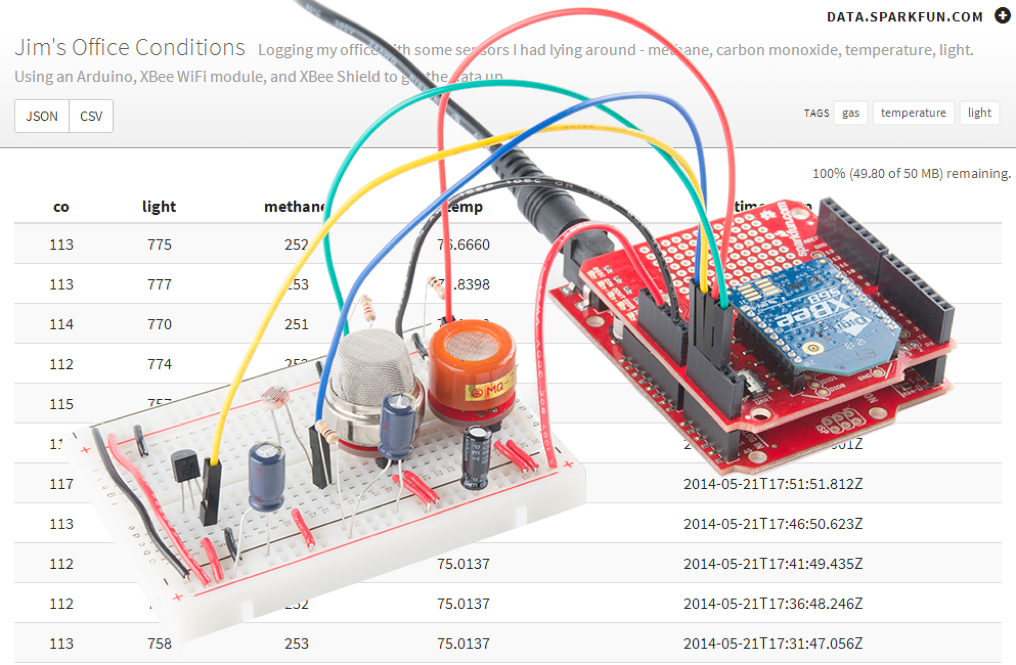
Advantages of logging data to the web over local storage, instant and constant access to logged data from anywhere, anytime.Here using the above setup we can monitor data like Temperature, ambient light, methane levels and carbon monoxide levels vital in the industries
Energy Efficient Lighting Technology using IoT sensor
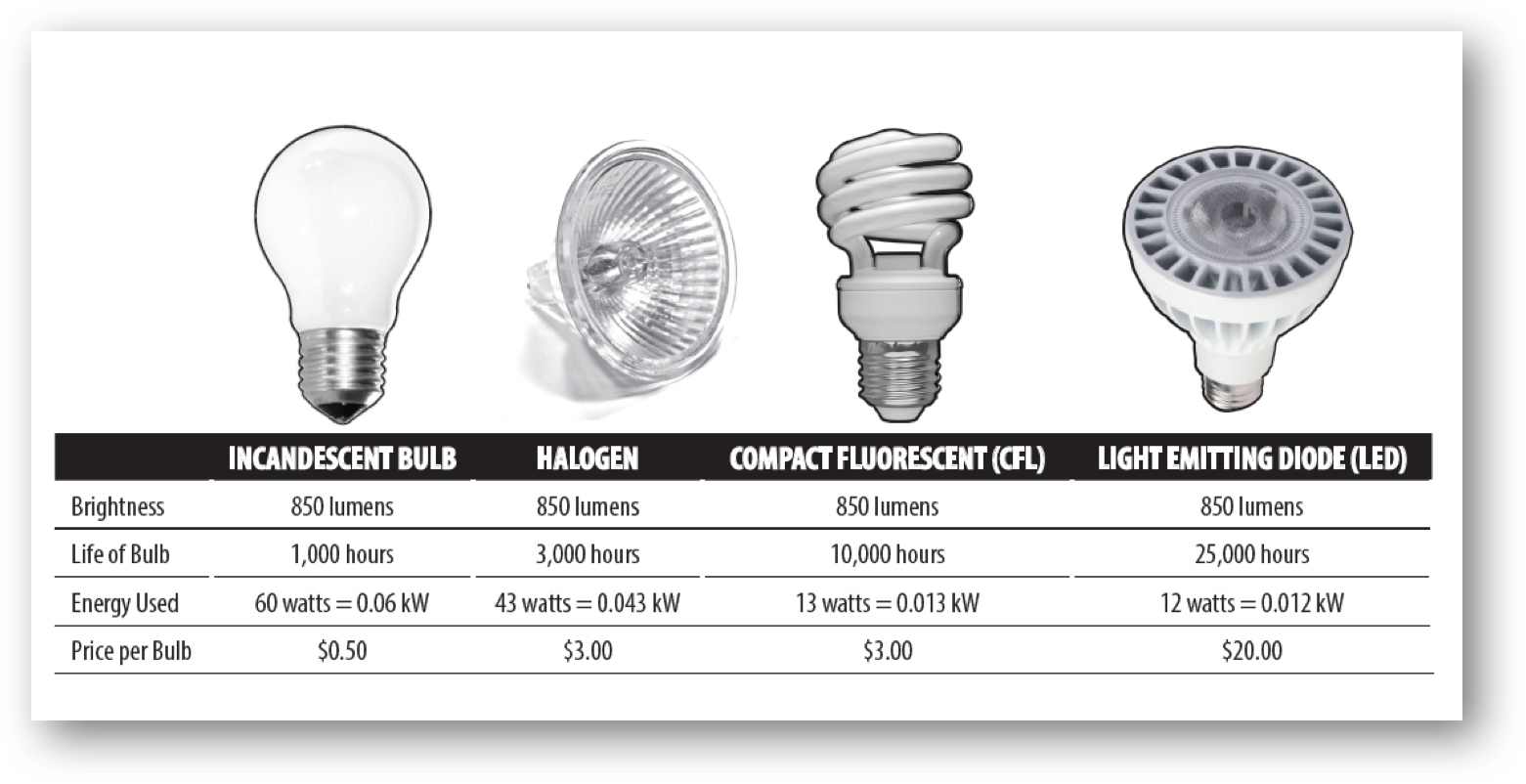
The Environmental Impact is just as important as the Energy Demand in studying the LCA. The Environmental impact can be considered as the most evident result of any product or process. The environmental categories that are usually taken into consideration are
- Global Warming potential (GWP)
- Acidification Potential (AP)
- lEutrophication Potential (EP)
- lHuman Toxicity Potential (HTP)
- lAbiotic Depletion Potential (ADP)
- lPhotochemical Ozone Creation Potential (POCP)
Here we learn the application of energy consumed for typical laboratory equipment, Measure throughout the lab multiple devices and equipment to determine the output of CO2 and the amount of power used Being energy efficient also relates to being cost effective. Most industry equipment could waste thousands of dollars leaving equipment running 24 hours a year. It is important to know which equipment must used less for cost and environmental benefits.
Energy Efficiency:
Requirements of lighting in various facilities in fc. (Lumens= fc*10.76)
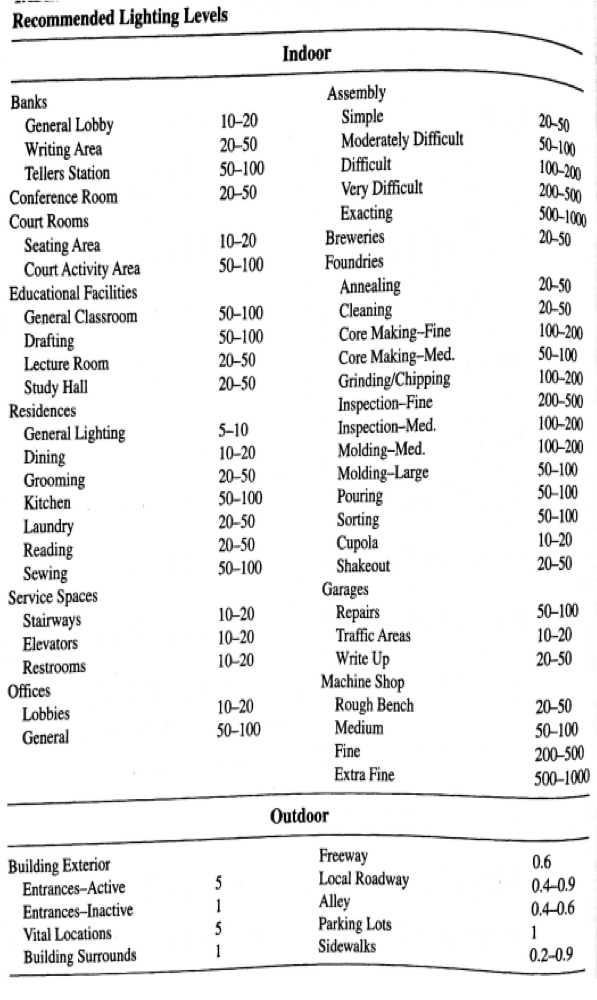
Specific luminosity is required by the Department of Defense under United Facilities Criteria (UFC) to various facilities in order to operate.