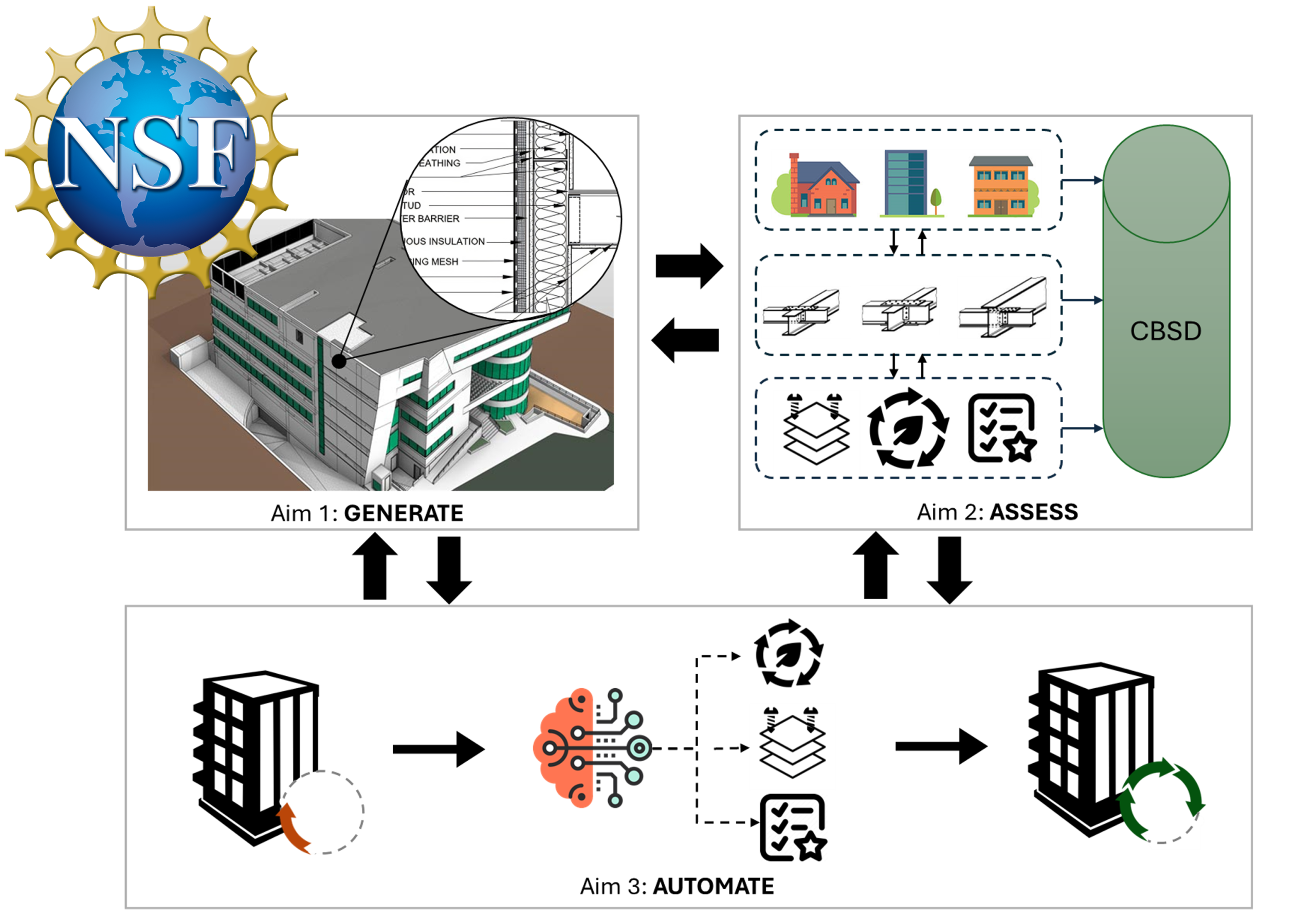
We’re super excited to announce that the CIRCLE lab, in partnership with the ARVIN lab, received an NSF award to combine life cycle assessment (LCA), machine learning, and generative AI to enable design for circular economy in early design stages! See the project abstract below.
Buildings account for a significant portion of global material use and carbon emissions, yet the construction industry lags in adopting circular economy principles that promote sustainability. Key decisions affecting a building’s long-term environmental impact—such as material selection and design for disassembly—are often made too late in the design process, when flexibility is limited. As a result, many buildings continue to be designed with limited consideration for end-of-life material recovery, leading to unnecessary waste, resource depletion, and increased environmental impacts. This project seeks to address this challenge by developing an advanced decision-support framework that enables early integration of circular economy strategies in building design, helping architects and engineers optimize material selection, reduce waste, and enhance sustainability in the built environment. By leveraging artificial intelligence and life cycle assessment, the research will provide practical, science-based tools to guide early design decisions, directly contributing to a more resource-efficient construction industry. Beyond its environmental benefits, the project will advance education and workforce development by integrating its findings into university curricula, mentoring students, and engaging industry stakeholders in circular building practices.
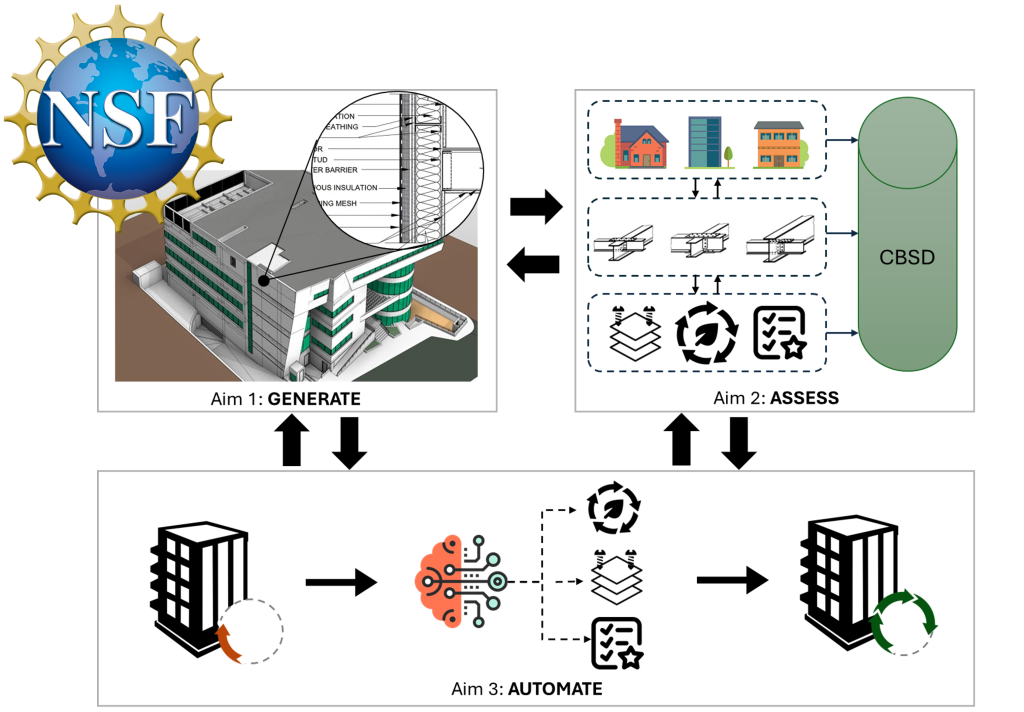
This research will develop a data-driven framework that integrates generative artificial intelligence, life cycle assessment, and circular economy principles to optimize material selection and reduce waste in the built environment. A key innovation of this work is an AI-driven system that generates technical specifications for materials and assemblies based on early-stage design parameters. These specifications will be evaluated using quantitative circularity indicators and life cycle assessment methodologies that measure embodied carbon, energy use, and other environmental impacts. The evaluated design alternatives will be compiled into a Circular Building Solutions Database, providing an open-access resource for sustainable building practices. Additionally, the project will develop an automated framework for circular design recommendations, enabling architects and engineers to make informed, data-driven decisions that enhance building circularity, improve resource efficiency, and minimize environmental impact. The integration of generative AI, sustainability assessment, and automated decision-making represents a transformative approach to circular building design, bridging the gap between early design flexibility and long-term sustainability goals.