It’s raining hard in Philadelphia right now, flood watches are out as I write this. It’s a fitting moment to share my first paper as a solo author, just out in the Journal of Industrial Ecology!
It bothers me when sustainability and resilience are treated as competing objectives in building design. Sure, you often need more materials to ensure redundancy: if something fails, there’s a backup system. But in the long run, there’s no sustainability without resilience, is there? The building has to last, after all.
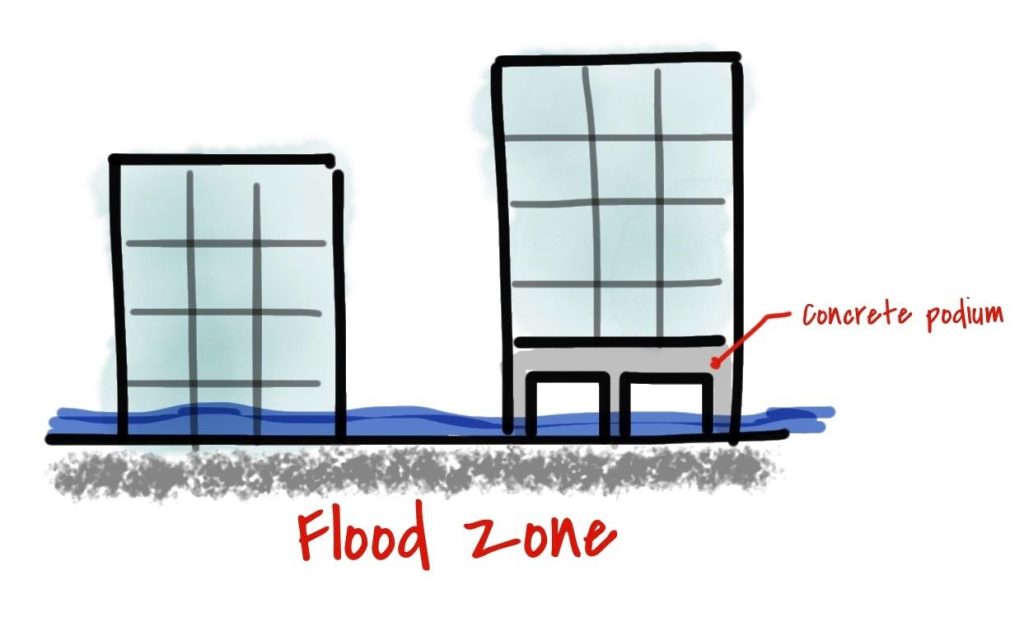
Look at the sketch below (I just made it with my fingers on my phone, so please excuse its rudimentary nature 😂). Those are two identical buildings, but the one on the right has more materials and higher embodied carbon because of the concrete podium. If you do a life cycle assessment, the one on the left will show lower environmental impacts. But when a flood happens, and one building keeps running and the other has flood damage, downtime, material and system replacements… then which building is more sustainable?
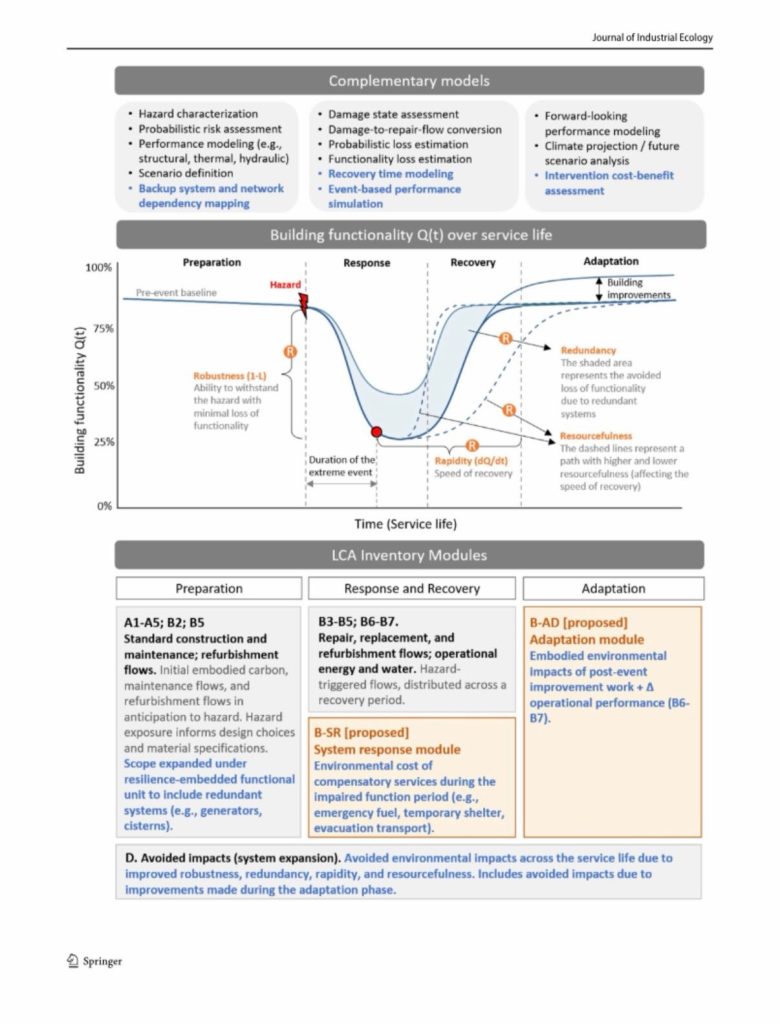
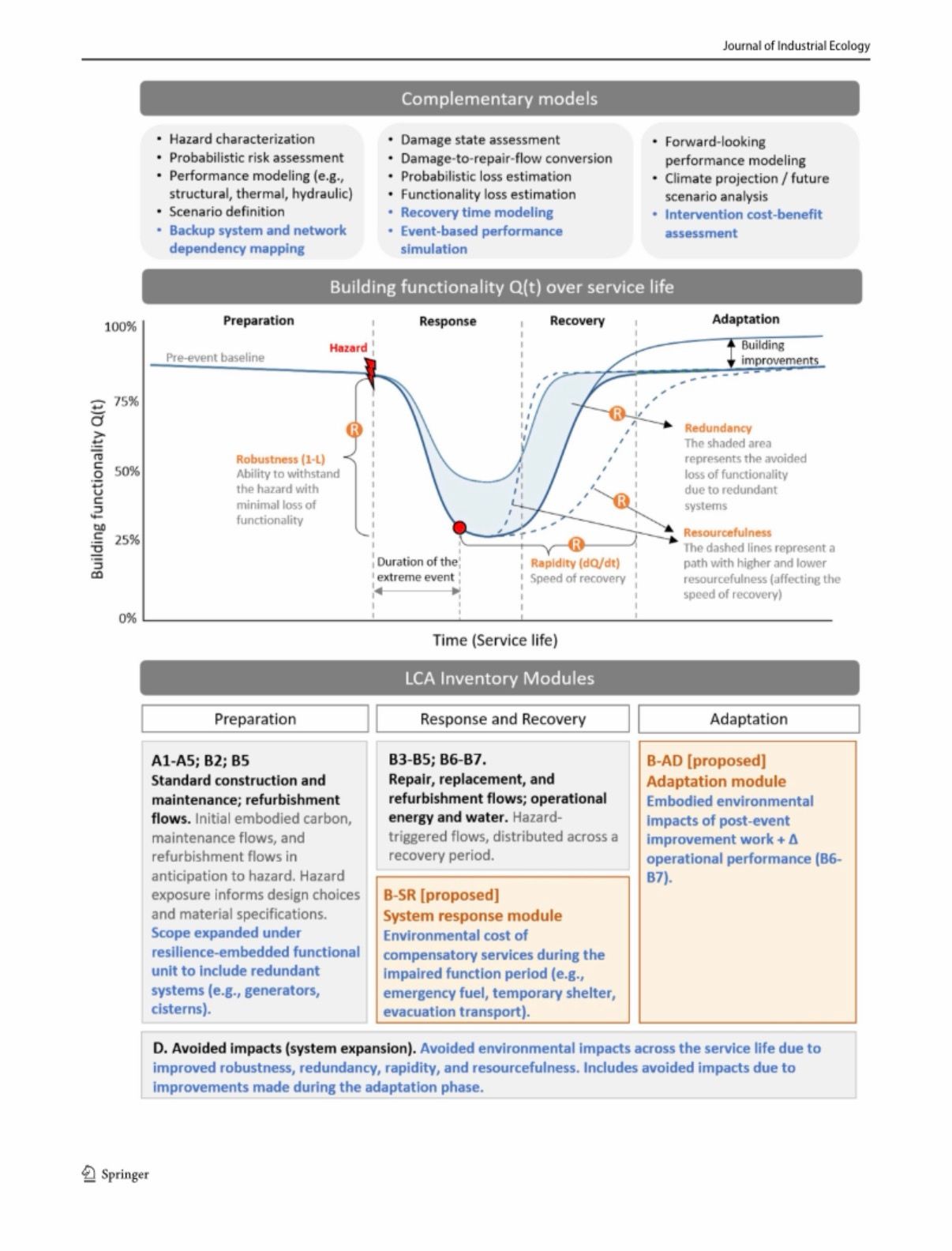
This is what my paper is about. As climate hazards become more frequent and severe, we need more comprehensive ways to account for resilience in LCA. Especially when LCA is increasingly used in building design to guide decision making. I reviewed how resilience has been operationalized in LCA, and which dimensions of resilience remain absent. And I proposed the RES-LCA framework to help us account for the environmental benefits of designing sustainable AND resilient buildings.
I’m super proud of this work! You can access at https://lnkd.in/ebkf4EMH
I’d love to see RES-LCA applied to real case studies, and welcome any feedback and suggestions for improvement.