 PhD student Darin Tallman is spending his summer at Savannah River National Lab characterizing post-irradiation MAX phases!
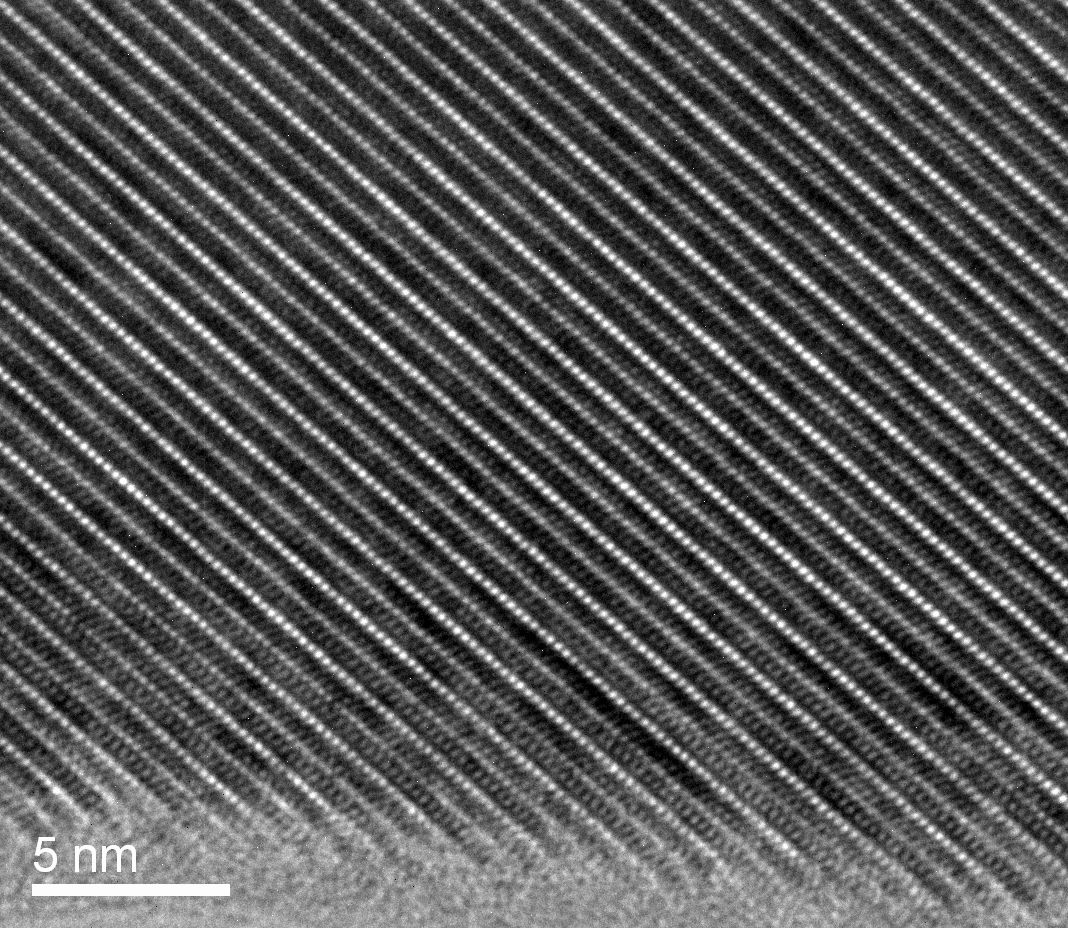
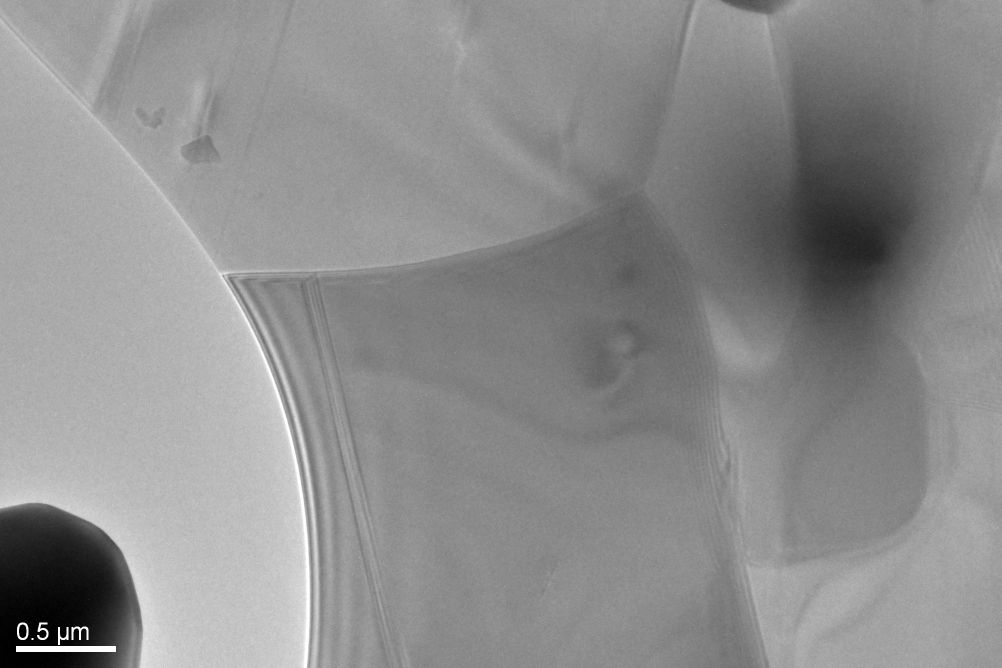
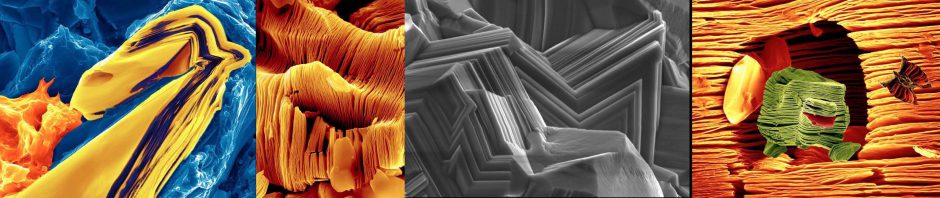
PhD student Darin Tallman is spending his summer at Savannah River National Lab characterizing post-irradiation MAX phases!
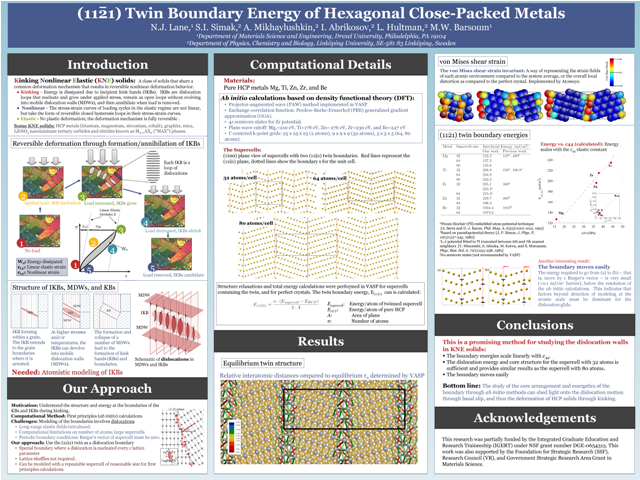
PhD student Nina Lane attended the 1st World Congress on Integrated Computational Materials Engineering (ICME), which was held at Seven Springs Mountain Resort July 10-14, 2011 in Seven Springs, PA. She presented a poster (below) at the conference.
For more information go here.
Nina Lane successfully proposed and defended her PhD thesis Monday, July 11th!
See her proposal abstract here.

PhD student Alex Moseson is currently implementing a patent-pending rice planting device in rural Thailand – the culmination of two years of work led by Alex and with the invaluable support of a senior design team, a church, an NGO, the university, and Bo Klua residents.
Learn more at DrexelThaiHarvest.org.

Dr. Michel Barsoum (PI), in collaboration with Linkoping University, has been awarded a Research Allocation for supercomputer units through Texas Advanced Computer Center (TACC)!
The computer time is for Ranger and Lonestar, which are clusters on TACC’s High Performance Computing Systems . The calculations will investigate kinking nonlinear elastic solids at the atomic level, which is crucial for understanding the deformation of MAX phases.
PhD student Michael Abdelmalak got a training on the synthesis and characterization of Li-ion batteries from Prof. Patrice Simon’s group at Université Paul Sabatier in France.
The training took place May 16-20. For more information on Li-ion batteries go to Prof. Simon’s page here.
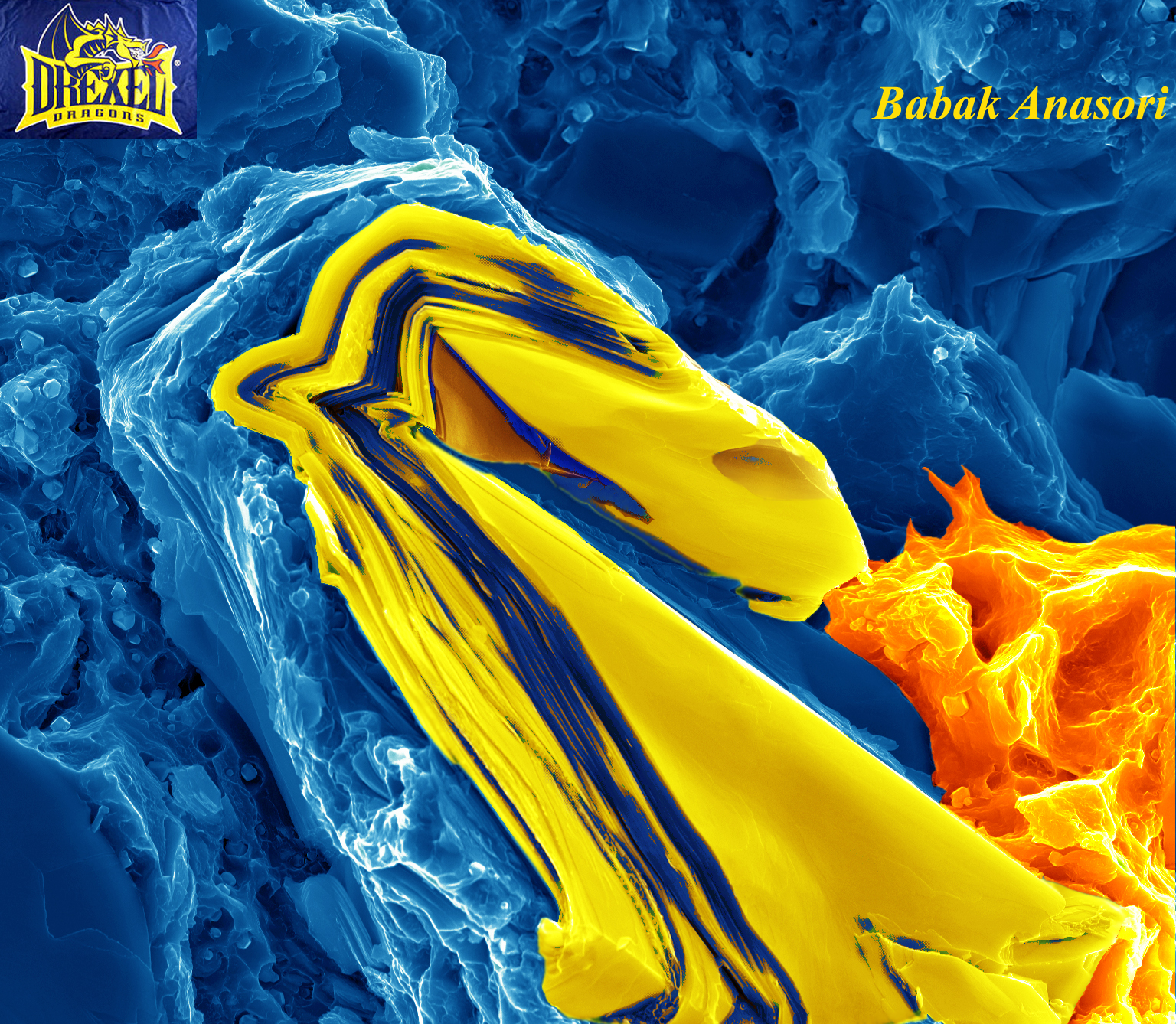
Babak gave an invited talk in Drexel’s Board of Trustees meeting on May 18th about his research and the award winning MAX Dragon image.
His talk was entitled “MAX, the nano composite Dragon.”

PhD student Babak Anasori will be giving a talk at the ASME Applied Mechanics and Materials Conference, McMAT-2011, which will be held in Chicago May 30 to June 1, 2011.
His talk is entitled “Mechanical Properties of Nanocrystalline Mg-Matrix Composites Reinforced with Ti2AlC.”

Nina Lane (PI) and Dr. Michel Barsoum have been awarded beam time for the summer 2011 beam cycle at the Los Alamos Neutron Science Center (LANSCE) at Los Alamos National Laboratory (LANL).
The experiments – which will work towards probing the atomic motion in select MAX phases at high temperatures – will be on the HIPPO and NPDF beamlines at the Lujan Neutron Scattering Center.

A review article on the elastic and mechanical properties of bulk MAX phases is now available online by Reviews in Advance, to appear in Annual Reviews of Materials Research 2011.
This article includes comprehensive tables, figures, and explanations of the chemistry/crystal structure (which MAX phases exist and why), defects, elastic properties (including the theory of kinking nonlinear elasticity), mechanical behavior and deformation mechanisms, fracture mechanics, and tribological properties of all bulk MAX phases known to date.
For full text go to our publications page here or visit Annual Review of Materials Research online.
The article reference is:
“Elastic and Mechanical Properties of the MAX Phases”, M.W. Barsoum, M. Radovic Annu. Rev. Mater. Res. 41, 9.1-9.33 (2011)
| Abstract: | The more than 60 ternary carbides and nitrides, with the general formula Mn+1AXn—where n = 1, 2, or 3; M is an early transition metal; A is an A-group element (a subset of groups 13–16); and X is C and/or N—represent a new class of layered solids, where Mn+1Xn layers are interleaved with pure A-group element layers. The growing interest in the Mn+1AXn phases lies in their unusual, and sometimes unique, set of properties that can be traced back to their layered nature and the fact that basal dislocations multiply and are mobile at room temperature. Because of their chemical and structural similarities, the MAX phases and their corresponding MX phases share many physical and chemical properties. In this paper we review our current understanding of the elastic and mechanical properties of bulk MAX phases where they differ significantly from their MX counterparts. Elastically the MAX phases are in general quite stiff and elastically isotropic. The MAX phases are relatively soft (2–8 GPa), are most readily machinable, and are damage tolerant. Some of them are also lightweight and resistant to thermal shock, oxidation, fatigue, and creep. In addition, they behave as nonlinear elastic solids, dissipating 25% of the mechanical energy during compressive cycling loading of up to 1 GPa at room temperature. At higher temperatures, they undergo a brittle to-plastic transition, and their mechanical behavior is a strong function of deformation rate. |
|---|